Systemd’s Nuts and Bolts; OpenCLI Specification; In Defense Of The Em Dash
There were some dangling resources that needed mopping up, and three of them are in today’s theme-less Drop.
TL;DR
(This is an LLM/GPT-generated summary of today’s Drop using Ollama, Qwen 3, and a custom prompt.)
- Systemd’s Nuts and Bolts — A Visual Guide to Systemd (https://freedium.cfd/@sebastiancarlos/systemds-nuts-and-bolts-0ae7995e45d3) explains systemd’s internals, including D-Bus, cgroups, and journal logging, providing a genuine understanding of what’s happening under the hood.
- OpenCLI Specification (https://opencli.org/) is a proposed open specification for a standard interface description format for command-line applications, enabling discovery, automation, and change detection in CLI APIs.
- The Em Dash Responds to the AI Allegations (https://www.mcsweeneys.net/articles/the-em-dash-responds-to-the-ai-allegations) is an essay by the em dash itself, responding to allegations made about it by artificial intelligence, with a humorous and lighthearted tone.
Systemd’s Nuts and Bolts
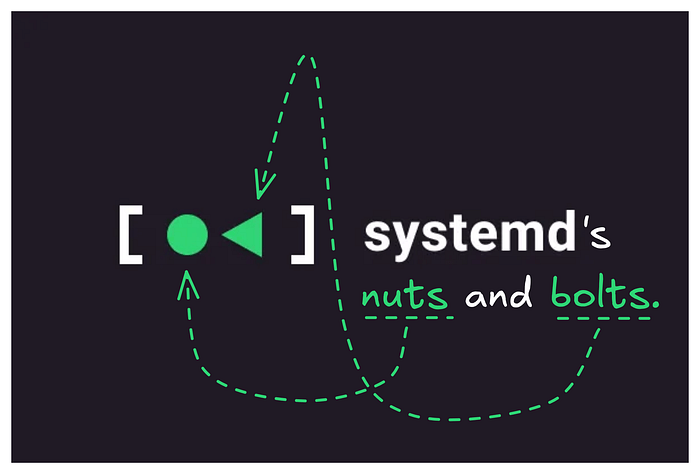
If you’ve ever felt intimidated by systemd (Linux’s still controversial init system), this section’s read might be exactly what you need. Sebastian Carlos has written what might be the most engaging systemd guide I’ve seen — Systemd’s Nuts and Bolts — A Visual Guide to Systemd — complete with soccer metaphors, irreverent humor, and proper visual diagrams.
The guide takes a “bottom-up” approach, starting with systemd’s secret foundation: D-Bus, the message-passing system that lets processes talk to each other. Turns out when you run systemctl start my-app, you’re actually just sending a D-Bus message to systemd.
From there, it dives into cgroups (the containerization tech that Docker relies on), systemd units (those .service files everyone copy-pastes), and the journal logging system. What makes this different from other systemd tutorials is that it explains why things work the way they do, not just how to use them.
Whether you love or hate systemd, it’s running on virtually every modern Linux system. Understanding its internals makes you a more effective developer and sysadmin. Fair warning, tho: the author admits upfront this is “hard” and starts from the internals rather than user-facing commands. But the payoff is a genuine understanding of what’s actually happening under the hood.
OpenCLI Specification
OpenCLI is a proposed open specification that defines a standard, platform and language agnostic interface description format for command-line applications. The goal is to allow both humans and automated tools to understand how a CLI tool works without requiring access to its source code or traditional documentation. This approach closely mirrors how OpenAPI specifies web APIs, but applies that abstraction layer to CLI environments.
The spec is currently in draft status at Version 0.1, with feedback actively being solicited. OpenCLI descriptions are single JSON or YAML documents conforming to the OpenCLI schema and are MIT licensed.
The main design principles focus on discovery and automation. This enables documentation auto-generation, CLI client and generator creation, automation of CLI interactions, and change detection in CLI APIs.
At the top level, an OpenCLI document contains several key fields. The opencli field holds the version string and is required. The info field contains details like name, version, contact, and license information. The conventions field specifies option conventions such as grouping short options. There are also fields for arguments, options, commands that define all parts of the CLI, plus exitCodes for possible return codes, examples, and custom metadata.
Practical uses include auto-documentation to generate human-readable docs for CLI tools. Client generation allows building API wrappers for CLI tools for automation or scripting purposes. The specification enables automation and orchestration by allowing higher-level tools like orchestration frameworks to reliably automate CLIs. It supports change tracking to monitor changes in CLI interfaces similar to API diffs. Shell completion can be generated based on the specification to provide auto-completion data for shells.
There’s also a fairly clear use for this spec by Model Context Protocol (MCP) servers.
OpenCLI essentially provides the “OpenAPI/Swagger for CLIs,” offering a standardized, machine and human-readable way to describe command-line tools and their interfaces in an automatable and language-agnostic manner.
In Defense Of The Em Dash
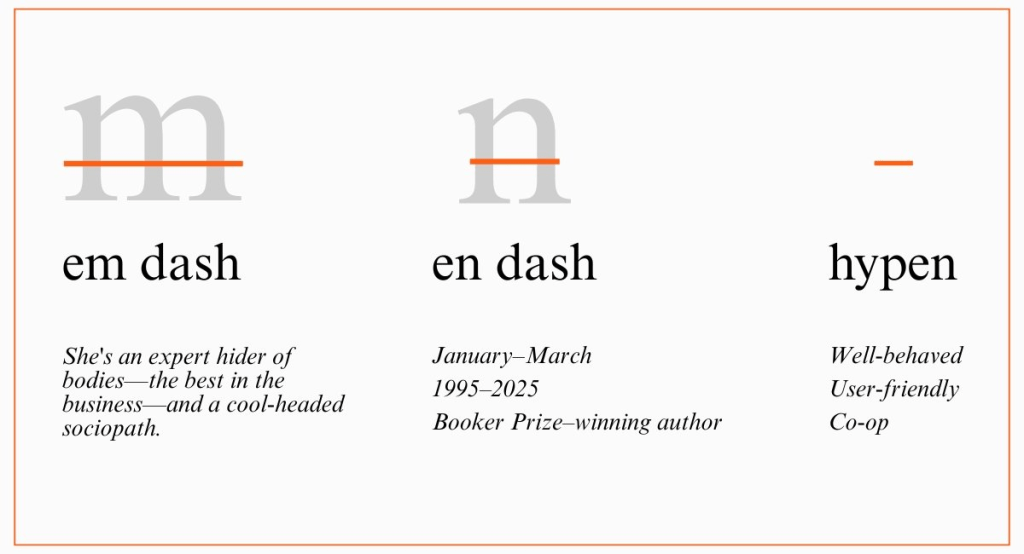
The Em Dash Responds to the AI Allegations, and boy howdy is it upset.
(For fun, count the number of times the post itself uses —.)
FIN
Remember, you can follow and interact with the full text of The Daily Drop’s free posts on:
- 🐘 Mastodon via
@dailydrop.hrbrmstr.dev@dailydrop.hrbrmstr.dev - 🦋 Bluesky via
https://bsky.app/profile/dailydrop.hrbrmstr.dev.web.brid.gy
☮️
 hrbrmstr's Daily Drop
Leave a comment