Seed; 🥢; Typographic Illusions
Programming note: I’m @ SuriCon for the remainder of the week, but still planning on cranking out the Thu & Fri Drops.
TL;DR
(This is an LLM/GPT-generated summary of today’s Drop. This week, I continue to play with Ollama’s “cloud” models for fun and for $WORK (free tier, so far), and gave gpt-oss:120b-cloud a go with the Zed task. Even with shunting context to the cloud and back, the response was almost instantaneous. They claim not to keep logs, context, or answers, but I need to dig into that a bit more.)
- LINE Seed provides a multilingual, open‑licensed typeface for cohesive branding across global markets (https://seed.line.me/index_en.html)
- Japanese chopstick sleeves reveal cultural shifts and design history, illustrated through historic examples and collector insights (https://letterformarchive.org/news/this-just-in-chopstick-sleeves-as-emissaries-of-japanese-typography-and-culture/)
- Jonathan Hoefler explains ten optical tricks type designers use to make letters appear balanced, offering free PDFs and teaching cards (https://www.typography.com/blog/typographic-illusions)
Seed

The era of startups commissioning custom brand typeface is almost over. But, there are still some design teams left who can make the case that some of a company’s VC or hard-earned cash should be spent on codifying the company’s look-and-feel into a font.
LINE Seed is a typeface family that was commissioned to give the whole LINE ecosystem its visual personality. It was born out of a practical need: the company operates in dozens of markets and languages, and before the font existed every region was using its own set of letters, which made the brand feel somewhat “scattered”. The designers imagined a seed that could take root in every product and grow with users, and the result is a single, cohesive typographic voice that works across Latin, Hangul, Japanese, Thai and Traditional Chinese.
While it has gorgeous, clean, geometric shapes, there are some subtle details that show the team cared about how the letters live/work together. The rounded corners echo the curvature of the LINE logo, while OpenType ligatures automatically tighten tricky pairs like “fi” and “ff,” keeping the text crisp even at tiny sizes. Even the service icons are baked into the font, so a designer can drop a chat bubble or a heart right next to the text without fumbling with separate graphics. Because each script has been tuned to share the same x‑height, stroke weight, and spacing rhythm, mixing English and Japanese on the same line looks natural instead of a mismatched collage.
Dalton Maag, the London foundry behind the project, brought years of corporate type‑design experience to the table, ensuring the family feels as polished as the fonts you see on high‑end tech products. The fact that it’s released under the SIL Open Font License 1.1 means anyone can use it in personal or commercial work, as long as the files themselves aren’t sold, which is a rare gift in the world of multinational branding.
For anyone who builds data dashboards, reports, or any interface that juggles multilingual content, LINE Seed offers a ready‑made solution that eliminates the “Frankenstein” look of mismatched fonts. Its polished details improve readability, its consistent weight across scripts keeps the page looking balanced, and its open licensing makes it an attractive, cost‑free option for projects that need a modern, globally‑aware sans‑serif.
The studio has some other great portfolio fonts that were fun to go through (it sure beats doomscrolling).
🥢

The story of Japanese chopstick sleeves, or hashibukuro, is a surprisingly rich window into the country’s past. What began as a silk‑wrapped delicacy for the aristocratic courts of the eighth to twelfth centuries gradually slipped into the hands of samurai feasting halls and, by the turn of the twentieth century, became a paper‑thin wrapper for the commuter’s bento. The shift from luxury to disposable mirrors Japan’s own sprint from feudal isolation to modern rail‑linked society, where a quick, portable meal was as essential as a ticket to the next station.
These tiny sleeves are more than just ordinary packaging. In a way, they are fusing visual languages together. The Numazuken department store’s design, for example, pairs a bold, brushed‑style capital “R” that evokes traditional Asian calligraphy with kanji set in a stark, Western‑inspired sans‑serif. The contrast isn’t random—it’s a deliberate statement about what a “modern Japan” looked like, blending reverence for heritage with an appetite for the new. Even deeper, the women’s script, or onnade, tells a story of constraint turned freedom: when kanji were reserved for official male use, women invented kana, a fluid syllabary that opened a literary voice for half the population. That legacy surfaces on a sake wrapper signed by the calligrapher Machi Shunsō, linking centuries‑old feminine expression to commercial design.
Beyond aesthetics, each sleeve acted as a compact billboard, encoding local pride, whether it be mountain silhouettes, regional foods, or steam‑engine motifs. The obsessive collector Susumu Kitagawa, who photographed over eight hundred of these wrappers after surviving World War II and a Siberian prison, illustrates another layer. His cataloging can be read as a response to trauma, a manifestation of mottainai, and a quiet act of stitching continuity into a world that had been torn apart.
The larger lesson is that disposable ephemera often preserve the rawest truths about a culture. No curator set out to save a chopstick sleeve for future study, yet the typography and imagery on those scraps capture the tensions of identity, modernization, gender, and impermanence more honestly than any polished museum piece. In the end, what we toss away may whisper louder about who we are than the artifacts we deliberately hold onto.
You really need to go to the site to see all the images. They’re amazing.
And, if you’re now more “chopstick-curious” than you were before, make sure to check out this rabbit hole.
Typographic Illusions
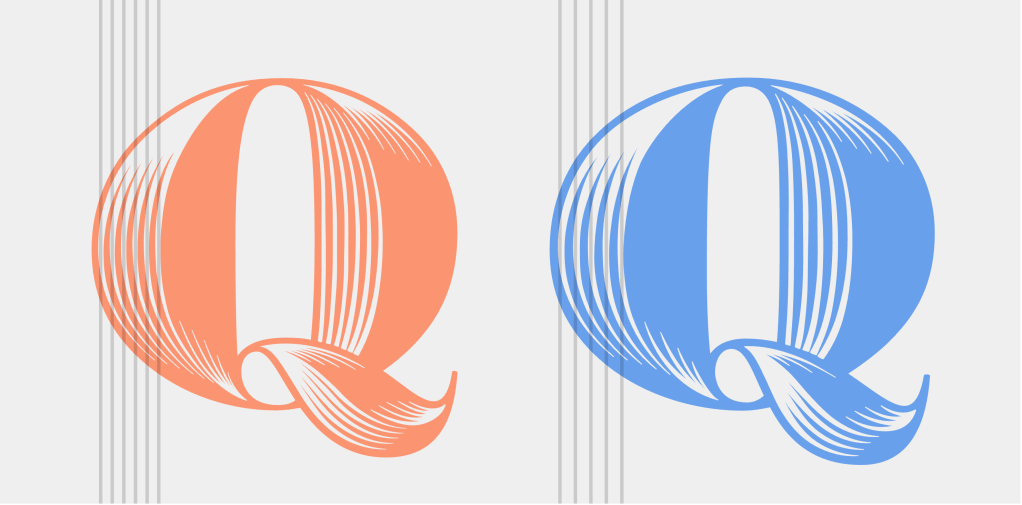
Take a look at this spiffy post by Jonathan Hoefler, where he pulls back the curtain on the optical tricks that type designers wrestle with every day. Ever notice that something on a page feels “off” but you can’t explain why? It’s because our eyes constantly deceive us, and designers have to outsmart that perception just to make letters look right.
Originally created as teaching material for a Netflix documentary, Hoefler walks through ten different ways typefaces have to “cheat” reality. For example:
- A circle has to be drawn a little taller than a square for the two shapes to appear the same height.
- The letter S needs a thicker middle than its ends, even though it still feels balanced.
- The upper bowl of a B is intentionally smaller than the lower one.
What’s especially cool is that Hoefler turned these concepts into physical cards you can flip, rotate, and compare—perfect for satisfying that “how does this work?” curiosity. He also offers free PDF files that you can print on transparent sheets and use at home or in a classroom.
If you’re interested in the hidden math behind the words you read, give it a look. Even if you aren’t a designer, it’s a fascinating peek at why the letters on the page don’t quite match the numbers you’d expect.
FIN
Remember, you can follow and interact with the full text of The Daily Drop’s free posts on:
- 🐘 Mastodon via
@dailydrop.hrbrmstr.dev@dailydrop.hrbrmstr.dev - 🦋 Bluesky via
https://bsky.app/profile/dailydrop.hrbrmstr.dev.web.brid.gy
☮️
 hrbrmstr's Daily Drop
Leave a comment