QH: Lit Lit; QH: Beyond Quacking; QH: Granary
This hit kind of hard Friday night (the Trump administration deliberately dropped that nugget after the news cycle), so y’all are getting barely edited notes for a bonus Drop this weekend.
I know I sound like some insane person, but if you are a reader who is in the U.S., it would not be unwise to stock up on shelf-stable/non-perishable item before the 20th. If I’m wrong, the worst-case scenario is that you have extra stuff for a while. If I’m right…
TL;DR
(This is an AI-generated summary of today’s Drop using Ollama + llama 3.2 and a custom prompt.)
For the record, I’ve not changed anything, and it just started to do this “summary of” stuff o_O.
- Summary of Lit web components (https://lit.dev) – A concise overview of Lit’s core advantages and features, including native browser support, encapsulation via Shadow DOM, and TypeScript-first design.
- Summary of FlockMTL paper (FlockMTL) – An introduction to FlockMTL, a DuckDB extension integrating LLMs and RAG capabilities into SQL workflows, targeting knowledge-intensive analytical applications.
- Summary of Granary library (https://granary.io/) – A universal translator for social web data, enabling interoperability between native APIs, scraped HTML, and standardized formats like ActivityStreams v1/v2, microformats2, Atom, RSS, and JSON Feed.
QH: Lit Lit

Longtime readers of the Drop know I 💙 Lit webcomponents. This past week, I came across — quite literally — the absolute best post describing what they are, why they rock, and how best to use them.
In “The Case for Web Components with Lit”, Philipp Kunz covers all these topics concisely, but thorough enough to both make convincing case to use Lit, but also to teach an old dog (like me) some new and spiffy tricks when it comes to using Lit in the most optimal way possible.
- Core Web Component advantages: native browser support, encapsulation via Shadow DOM, framework interoperability, scalability
- Lit library features: reactive properties, declarative templates, performance optimizations, TypeScript-first design
- TypeScript integration patterns: type-safe properties/events, interface-driven development, enhanced tooling support
- Component development techniques:
- Slot-based composition
- Reactive controllers for state management
- Lifecycle hooks and DOM querying
- CSS-in-JS styling with Lit’s
csstag
- Testing strategies using modern web test runners
- Performance optimization methods:
- Template caching
- Efficient update detection
- Lit’s
repeatdirective
- Framework interoperability examples for React/Vue
- Real-world implementation patterns:
- Design system components
- Micro-frontend architectures
- TypeScript best practices:
- Strong event/property typing
- Generic component patterns
- Custom event definitions
- Companion tooling showcase (dees-wcctools)
- Resource references for deeper exploration
QH: Beyond Quacking
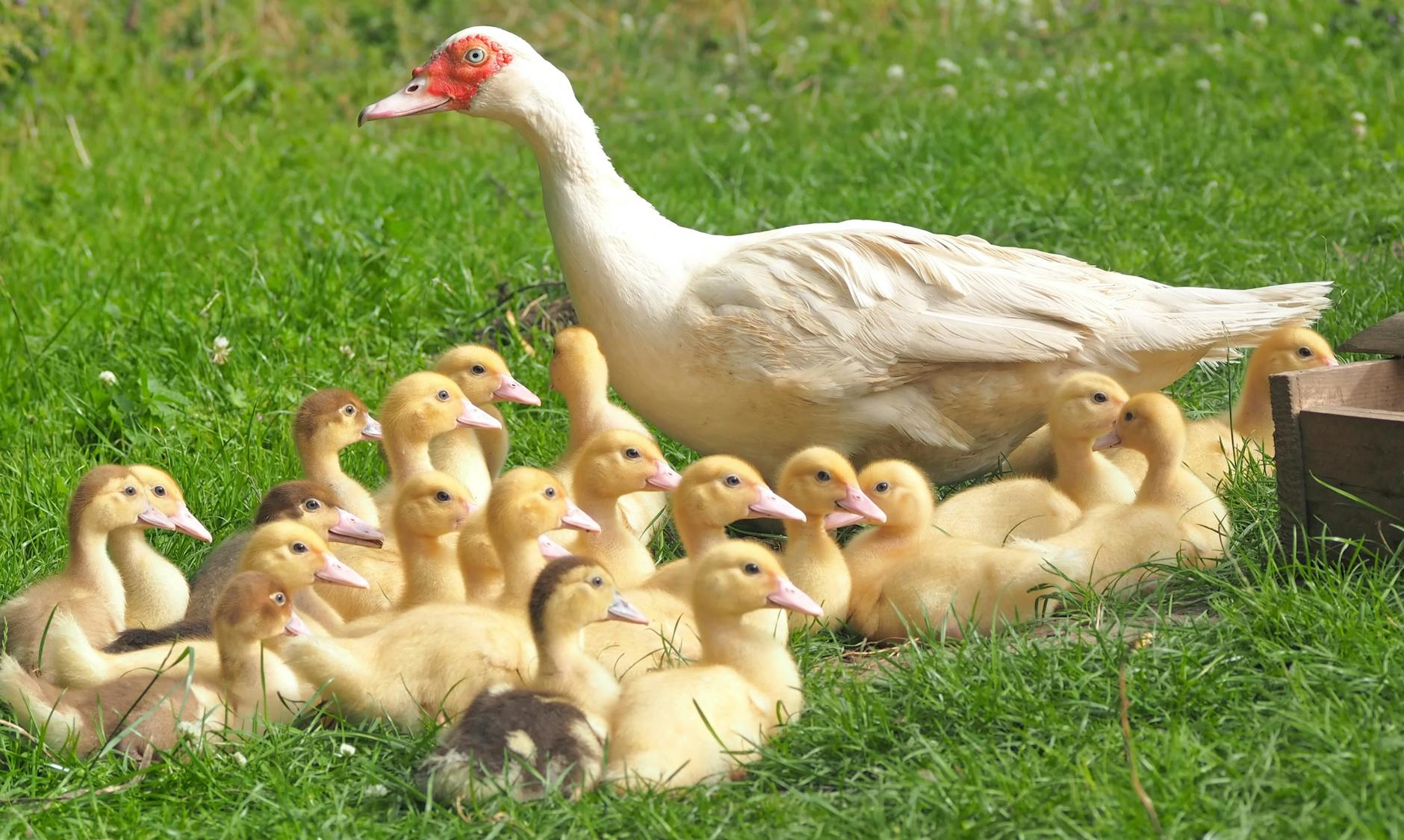
I read “Beyond Quacking: Deep Integration of Language Models and RAG into DuckDB” earlier in April, and it’s a perfect item for this weekend’s “Quick Hits” edition since I don’t have a DuckDB-focused edition on the planning calendar for a bit.
The paper features FlockMTL — a DuckDB extension integrating LLMs and RAG capabilities directly into SQL workflows, targeting knowledge-intensive analytical applications. It introduces novel schema objects (MODEL, PROMPT), semantic functions, and optimizations to simplify complex data pipelines combining structured/unstructured data analysis.
These are the notes on FlockMTL core features ripped from my Joplin page on it:
MODEL & PROMPT are first-class resources letting us modify global LLM/ML configs without modifying our actual queries:
CREATE GLOBAL MODEL('model-relevance-check', 'gpt-4o-mini', 'openai');
CREATE PROMPT('joins-prompt', 'is related to join algos given abstract');
FlockMTL comes with new semantic DDB functions:
- Scalar (
llm_filter,llm_complete_json) - Aggregate (
llm_rerank,llm_first/last) - Hybrid search fusion (RRF, CombMNZ, etc.)
FlockMTL introduces several optimizations to enhance LLM-integrated SQL workflows, focusing on efficiency and usability. Here’s a technical breakdown of the key mechanisms:
“Batching” dynamically groups input tuples into optimal batch sizes based on LLM context windows, achieving 7× speedup for chat completions and 48× for embeddings. The system automatically reduces batch sizes by 10% upon context overflow errors and handles edge cases where individual tuples exceed context limits by returning NULL.
“Meta-Prompting” implements structured prompt templates that combine user instructions with:
- Formatting rules
- Output expectations
- Serialized tabular inputs
“Execution Plan Controls” extends DuckDB’s query planner with:
- Batch size visualization/overrides
- Serialization format selection (XML/JSON/Markdown)
- Meta-prompt inspection tools
Example Workflow
WITH relevant_papers AS (
  SELECT * FROM research_papers
  WHERE llm_filter(params, prompt, {title, abstract})
)
SELECT
  llm_complete_json(params, prompt, {content}) AS insights,
  llm_rerank(params, prompt, content) AS rankings
FROM relevant_papers
Supports cloud (OpenAI/Azure) and local (Ollama) LLMs.
If you have an Apple Silicon Mac or another system with a compatible GPU, this is a nice way to experiment with RAG in a SQL context.
QH: Granary

Every social media platform uses a different “content object” format, despite all of them (pretty much) having the same overall structure.
Granary (GH) is a spiffy library and REST API designed to fetch and convert social data across various platforms and formats. It acts as a (sort of) universal translator for social web data, enabling interoperability between native APIs, scraped HTML, and standardized formats like ActivityStreams v1/v2, microformats2, Atom, RSS, and JSON Feed. The framework emphasizes open protocols while supporting major platforms including Twitter, Mastodon, Bluesky/AT Protocol, GitHub, and Instagram.
The tool provides two primary interfaces:
- A Python library (
pip install granary) for programmatic access - A REST API available at granary.io for HTTP-based interactions. Both methods handle OAuth authentication and return data wrapped in ActivityStreams 1.0 JSON with OpenSocial envelope formatting by default. The API supports multiple output formats including ActivityPub-compatible JSON, Atom feeds, and microformats2 HTML.
Recent updates (v8.1 as of March 2025) added enhanced Bluesky integration including hashtag facets, improved content truncation for non-space-delimited languages, and NIP-27 support for Nostr. The project emphasizes privacy – no user data is stored, only transformed in transit.
Tis a super-niche solution, but is also a nice codebase to peruse if you want to get familiar with the various socmed platform data formats.
FIN
Remember, you can follow and interact with the full text of The Daily Drop’s free posts on:
- 🐘 Mastodon via
@dailydrop.hrbrmstr.dev@dailydrop.hrbrmstr.dev - 🦋 Bluesky via
https://bsky.app/profile/dailydrop.hrbrmstr.dev.web.brid.gy
☮️

 hrbrmstr's Daily Drop
Leave a comment