Next Comes What; If You Can Keep It; Pledge, Will, Vow
It was/isa “coping” weekend as #4 is back off to college (part of the reason for no Drop on Friday), and we have January 20th to contend with.
So, today we’ve got some resources and thoughts to help you dig in and get through the coming 4+ years.
We’ll be back to our regular tech Drops on Monday.
TL;DR
(This is an AI-generated summary of today’s Drop using Ollama + llama 3.2 and a custom prompt.)
- Andrea Pitzer, author and journalist, hosts “Next Comes What” podcast examining historical patterns in democracy and authoritarianism (https://sites.libsyn.com/555737)
- “If You Can Keep It” newsletter by Protect Democracy provides guidance on strengthening democratic institutions through local engagement (https://www.ifyoucankeepit.org/about)
- Barbara Kruger’s digital installation “Pledge, Will, Vow” inspired an augmented reproduction exploring creative interpretations of the Pledge of Allegiance (https://rud.is/pledge/)
Next Comes What

Andrea Pitzer, an American journalist and author based near Washington, DC, specializes in uncovering forgotten historical narratives that illuminate the relationships between authoritarianism, democracy, and human rights. After graduating from Georgetown University’s School of Foreign Service in 1994, where she studied nuclear negotiations, she pursued further studies at MIT and Harvard as a Nieman Foundation affiliate.
Her career path took several turns before journalism, including work as a music critic, portrait painter, French translator, and martial arts instructor. In 2009, she founded and edited Nieman Storyboard, a narrative nonfiction site for the Nieman Foundation, serving in that role until 2012. Her writing has appeared in The Washington Post, The New York Review of Books, Outside, GQ, Vox, and Slate.
Pitzer has authored three books that showcase her dedication to deep historical research. The Secret History of Vladimir Nabokov revealed how the author wove his family’s experiences with twentieth-century tragedies into his novels. One Long Night: A Global History of Concentration Camps traced the evolution of mass civilian detention from its origins through modern times. Her most recent work, Icebound: Shipwrecked at the Edge of the World, chronicles Dutch navigator William Barents’s Arctic voyages and his crew’s struggle for survival during the winter of 1596.
She combines scholarly research with extensive fieldwork, conducting investigations across four continents. Her Arctic expeditions, including a 2019 voyage to Novaya Zemlya retracing Barents’s journey, demonstrate her commitment to firsthand experience. She holds ASA certifications for keelboat and bareboat cruising and is certified to carry a rifle for polar bear defense in the Norwegian Arctic. Currently, she hosts a podcast called “Next Comes What” and publishes “Degenerate Art,” a newsletter covering history, politics, climate issues, and the Arctic.
Her expertise on concentration camps gained particular attention in 2019 during discussions about U.S. Border Patrol detention facilities. Her research spans from the first concentration camps in Spanish Cuba during the 1890s through contemporary systems, including those used for ethnic Uyghurs in China and Japanese Americans during World War II.
Andrea has a new podcast — “Next Comes What with Andrea Pitzer” — in which she uses her unique historical lens to help us make sense of the (many) contemporary challenges to democracy. Drawing on her extensive research into authoritarianism and democratic institutions, she layers in appropriate historical context to current events that can feel overwhelming or (yay we get to use this word again every REDACTED day) unprecedented.
If you are like me, and grappling with uncertainty about what happens after tomorrow, Pitzer’s podcast may help (it has helped me, at least). In nearly every episode, she offers frameworks for understanding institutional resilience. If you read her work on Nabokov (the audiobook is ~15 hours and very consumable), you’ll get more background on how societies have navigated similar challenges throughout history. And, in her podcast, she helps us examine patterns in how democracies respond to pressure and how citizens have historically maintained community bonds during political transitions.
They’re short, consumable episodes and I hope she continues them well into the next few years.
If You Can Keep It
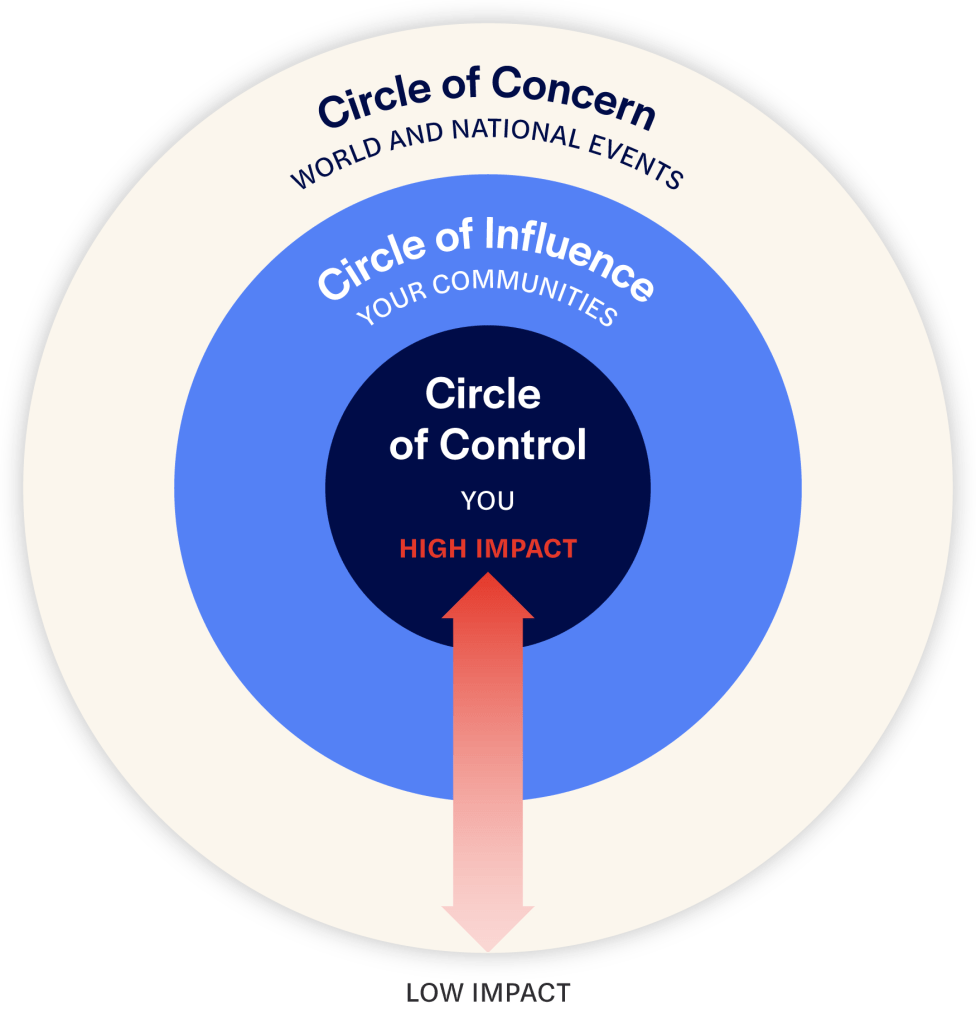
The fight between democracy and autocracy directly impacts fundamental rights and freedoms. We regular folk play a key role in strengthening democracy, particularly at the local level where individual influence is strongest. But, that means actually doing something.
This may not work for everyone, but a first step for me was deleting all news and political podcasts from my Overcast app. Turns out the talking heads did a pretty poor job preparing everyone for November 6, but they sure made some coin along the way. Developing better information consumption habits means moving away from social media and cable news toward substantive local and national journalism. I’m slowly adding back content, but am being far more judicious in what I spend my time on/with.
Having better “news” may mean that you have to become an amateur journalist, since local news, especially, has been on life support for some time. You don’t have to write like a Pulitzer-winning newsy, too. You just need to start.
Zoom in (literally, since most local meetings are accessible over some type of videoconference setup thanks to COVID) to your local council and school board meetings and summarize the topics and outcomes in a newsletter.
Take a trip down to your local law enforcement office and, perhaps, identify troubling patterns in the activity logs (which are public info in most places, though an increasing number of these organizations are charging fees).
Support, help out at, then tap into the stats from food pantries, homeless centers, etc. and help folks understand what’s happening in their communities.
While voting matters, protecting democracy requires sustained involvement beyond elections. This includes organizing around specific issues rather than candidates, as issue-based movements tend to build more durable political power. Getting involved with local political parties, despite their current unpopularity, helps shape their commitment to democratic values.
“If You Can Keep It” is a newsletter by Protect Democracy. While their advice was ignored by at least three-million American (who could not be bothered to just show up and vote), they do a great job breaking down issues and offering practical guidance. It and other resources from Protect Democracy can help you get started preparing for the long haul ahead. There will be no radical change. No “Thanos SNAP!” to bring back some semblance of “normal democracy”. We’ve got to build durable democratic institutions and practices that can withstand authoritarian pressure, and the only way this has worked in other places (ref. the first section) is through broad-based community engagement.
Pledge, Will, Vow
A dear mate shared a clip he received from someone looking at an exhibition at a museum. The above is a similar one that was on TikTok, so a link to that isn’t going to work much longer, hence the embed.
This is Barbara Kruger’s Pledge, Will, Vow (1988/2020) — a digital installation which distorts the Pledge of Allegiance, marriage vows, a last will and testament. I found it quite arresting and became a tad obsessed with the “Pledge”.
Another way we can cope is to create. And, “Pledge” lingered with me just enough to force an augmented reproduction. Kruger’s work is far more arresting, but it felt good to stop playing with DuckDB and network packets for a bit and make something a bit more creative (with full credit going to Barbara).
I even managed to sneak some Flexoki and Recursive Mono into it (two things which should be familiar to Drop readers).
It’s a zero-framework, single page HTML/CSS/vanilla JS creation (including the text), that I lightly salted with some comments if anyone wants to take bits of it to hack on.
FIN
Remember, you can follow and interact with the full text of The Daily Drop’s free posts on:
- 🐘 Mastodon via
@dailydrop.hrbrmstr.dev@dailydrop.hrbrmstr.dev - 🦋 Bluesky via
https://bsky.app/profile/dailydrop.hrbrmstr.dev.web.brid.gy
Also, refer to:
to see how to access a regularly updated database of all the Drops with extracted links, and full-text search capability. ☮️

 hrbrmstr's Daily Drop
Leave a comment