On The Perception Of Graph Layouts; On Complexity And Root Cause; Small, Edge-y, And Fast
The Drop is on holiday starting this weekend! We’ll be in Acadia with the entire hrbrclan, and I will likely be dropping pics on socmed for anyone interested in the glorious Maine outdoors.
As such, I’m leaving y’all with three long-form reads which will hopefully make up for the lack of daily editions (which also means no TL;DR).
On The Perception Of Graph Layouts

Graph-based models are extensively used in software engineering for various applications, including development, testing, specification, documentation, and reengineering. The layout of these graphs, typically determined by the viewer or through graph sorting algorithms, can significantly impact their comprehensibility and popularity. This study, conducted by Grabinger et al., empirically investigates the influence of different graph layouts on the perception of causal graphs using eye tracking and questionnaires. The study aims to determine whether Gestalt principles can predict the perception of graph layouts and how different alignments affect comprehensibility and popularity.
The study employs a within-subject design involving 29 participants who were exposed to three distinct graph layouts: Top-Down, Bottom-Up, and Random. The participants’ eye movements were tracked while they performed tasks related to memorizing, reproducing, and debugging the graphs. The study also included preferential looking tasks (PLTs) to assess the popularity of the layouts. The data collected were analyzed using both descriptive and inferential statistics to evaluate the hypotheses.
The results indicate that Gestalt principles, particularly proximity, similarity, and closure, hold true for causal graphs. The study found that the layout of a graph significantly affects its comprehensibility and popularity. Specifically, the Top-Down layout was found to be the most comprehensible and popular, followed by the Bottom-Up and Random layouts. The study also revealed that the knowledge of the causal context enhances the preference for the Top-Down layout.
The findings suggest that the alignment of model elements in a graph influences their perception, with tree-like structures (Top-Down and Bottom-Up) being more effective than random arrangements. The study highlights the importance of considering Gestalt principles when designing graph layouts to improve comprehensibility and personal preference.
You’re thinking “so what?”, right?
Well, graph layouts play a crucial role in the usability and effectiveness of software applications that involve graph-based models. The findings in the paper underscore the impact of graph alignment on human comprehension and preference. For software developers, this means that the choice of graph layout should not be arbitrary but should be guided by principles that enhance readability and human experience.
Incorporating feedback and conducting usability testing can help developers refine graph layouts to better meet expectations. Eye tracking and other measured experience research methods can provide valuable insights into how we interact with graph-based models, allowing developers to make data-driven decisions about layout design.
The study also opens avenues for further research into the optimal layouts for different types of graphs and use cases. Developers should stay informed about ongoing research in this area and be open to adopting new techniques and best practices as they emerge. Additionally, developing style guides and incorporating layout recommendations into software development processes can help standardize and improve the quality of graph-based visualizations.
On Complexity And Root Cause
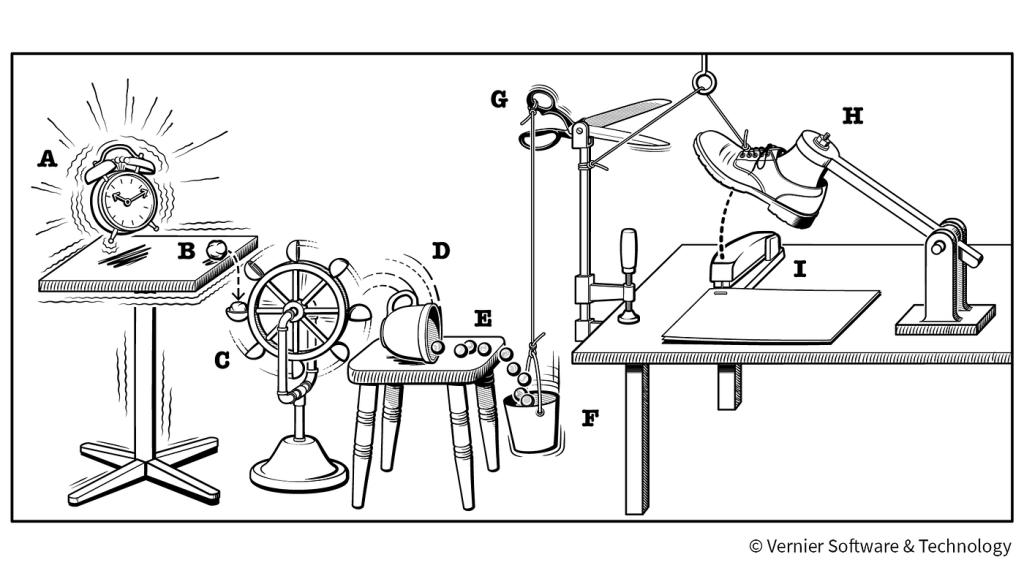
In a recent blog post, Peter Ludemann, waxed poetic on the complexities of identifying root causes in system failures, arguing that the concept of a “root cause” can be misleading and overly simplistic. The post begins with a reference to a sarcastic remark by economist Alfred L. Malabre Jr., who noted that the stock market has predicted “nine of the last four recessions,” highlighting the fallibility of seemingly predictive indicators.
Ludemann suggests that what are often labeled as “root causes” should instead be considered contributors. This distinction is important in our understanding system failures. He uses an example of a configuration system that itself enables making easy mistakes. He questions whether an incident occurs every time the configuration system is used, implying that while the system may contribute to failures, it is not the sole cause.
The post emphasizes that complex systems are characterized by their ability to remain operational despite the presence of vulnerabilities. If every identified vulnerability were treated as a root cause, systems would theoretically be down all the time. However, this is not the case, indicating that systems have inherent mechanisms to manage and mitigate risks.
We live in a highly adaptive universe where systems are constantly evolving. This dynamic nature means that even if all current vulnerabilities were identified and patched, new ones would emerge over time. Additionally, the resources required to identify and fix all vulnerabilities are often unavailable, particularly in terms of time.
Focusing on root causes can obscure the true nature of how complex systems operate. By concentrating solely on eliminating root causes, we may overlook those adaptive strategies that systems use to stay functional. Making this perspective shift would afford better understanding and managing the risks inherent in complex systems.
There is a twist maze of embedded links in the post worth tapping into, and that should take you some time to burn through.
Small, Edge-y, And Fast

Combined, these four posts/papers should keep you busy for a day or two. They focus on getting real work done with real world, real sized data, which is what most of us have.
- Jordan Tigani: Big Data is Dead
- Kimberley Mok: The Rise of Small Language Models
- Rémi Dettai: Building a log search service for under $7/month
- De Palma1, Giallorenzo, Mauro, Trentin, & Zavattaro: FunLess: Functions-as-a-Service for Private Edge Cloud Systems
FIN
Remember, you can follow and interact with the full text of The Daily Drop’s free posts on Mastodon via @dailydrop.hrbrmstr.dev@dailydrop.hrbrmstr.dev ☮️
 hrbrmstr's Daily Drop
Leave a comment