Featured Free[mium] Font: Quablo; Featured Fee Font: Runtti; Alphabetical Playground
Fonts galore, today, along with a coffee-table (well, matcha-table for me) book that was hard to put down.
TL;DR
(This is an LLM/GPT-generated summary of today’s Drop. Ollama and MiniMax M2.1.)
- Quablo is a modern sans-serif from Atipo Foundry featuring a clean minimalist design with seven weights, excellent tabular figures for data-heavy projects, support for European languages, and a flexible pay-what-you-want licensing model (https://www.atipofoundry.com/fonts/quablo)
- Runtti is a chunky, angular display typeface with subtle slant, distinctive blocky construction, thoughtful character width variation, comprehensive diacritical marks, and lowercase glyphs that continue the geometric aesthetic while maintaining short ascenders and descenders (https://github.com/juusohai/Runtti)
- Alphabetical Playground is a 698-page book by Nigel Cottier (now Pentagram design director) that treats letterforms as raw material for graphic experimentation, exploring design premises like pattern disruption and cross-cultural recontextualization through a methodical, systematic approach built in Glyphs (https://alphabeticalplayground.com/)
Featured Free[mium] Font: Quablo
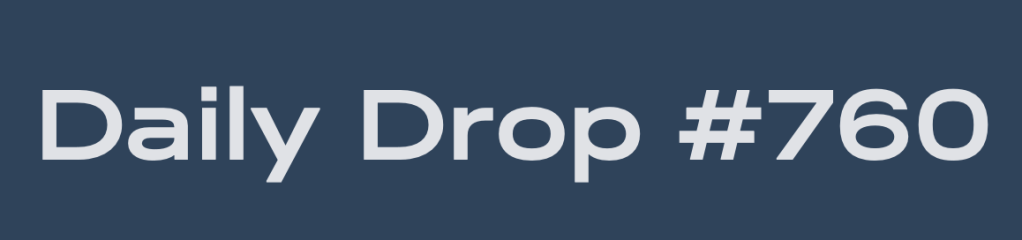
Quablo is a modern sans-serif from Atipo Foundry, an independent type studio based in Gijón, Spain. It has a super clean, über-minimalist look one might expect from a geometric sans, but there’s enough warmth in its construction that it doesn’t feel at all sterile or brutalist. The family comes in seven weights with matching italics, so we’ve got plenty of range to play with whether we’re setting a headline or body copy.
It’s also quite glorious in tables given that the designers paid very close attention to the design of the digits. Since they’re tabular figures, they line up perfectly in columns, which is a lifesaver if you’re designing dashboards, data tables, annotating charts, or anything data-heavy. It also supports a wide range of European languages, so it travels well for international projects.
You can 100% try for free and keep using a diminutive set of weights forev. Atipo runs a pay-what-you-want model and was cheap enough to warrant me spending the gadget budget on both desktop and web fonts so I can create another ggplot2 and Observable Plot chart theme with them.
Featured Fee Font: Runtti
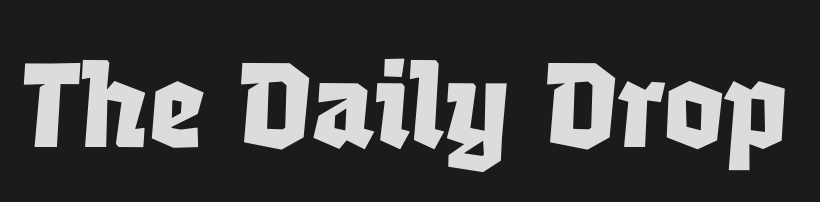
This font brought back SO MANY (good) memories of junior high. I was one of those nerds who had font transfer sheets (like we talked about a few Drops ago), and a super similar font to Runti was my well-overused fav. So, we’re gonna obsess over this one for a bit.
The creator describes it as “a curveless display typeface with a slight slant,” but that does not do it justice.
This is a chunky, angular display face with super pronounced curves. The letterforms have a distinctive blocky construction with sharp terminals and strong geometric shapes that create very distinct visual weight and presence.
The slant mentioned in the specimen text is subtle but consistent, giving the font a dynamic, slightly aggressive stance without becoming a true italic. The curves are oddly fluid despite the overall heaviness. For instance, if you do poke at it, take note of how letters like ‘R’, ‘B’, and ‘D’ maintain smooth bowls even within the bulky framework.
It’s easy to cut corners in such a styled font, but the character width (one of said corners) varies in a thoughtful manner. To see what I mean, take a quick sec to compare the condensed proportions of ‘I’ and ‘J’ against the breathing room of the horizontal expansion of ‘M’ and ‘W’. The diacritical marks are also comprehensive (yet another one of those corners), maintaining the same geometric assertiveness as the base characters rather than appearing as delicate afterthoughts.
In such a display font, one often gets the feeling that the lowercase counterparts were phoned in. But in Runtti, the lowercase glyphs continue the angular aesthetic and also introduce more variation in height and proportion. Ascenders and descenders are relatively short, keeping the x-height dominant. And, to continue to demonstrate the attention to detail, the numerals follow the same structural logic with slightly rounded corners that soften what could otherwise be overly mechanical.
I must find a way to use this font this year.
Alphabetical Playground
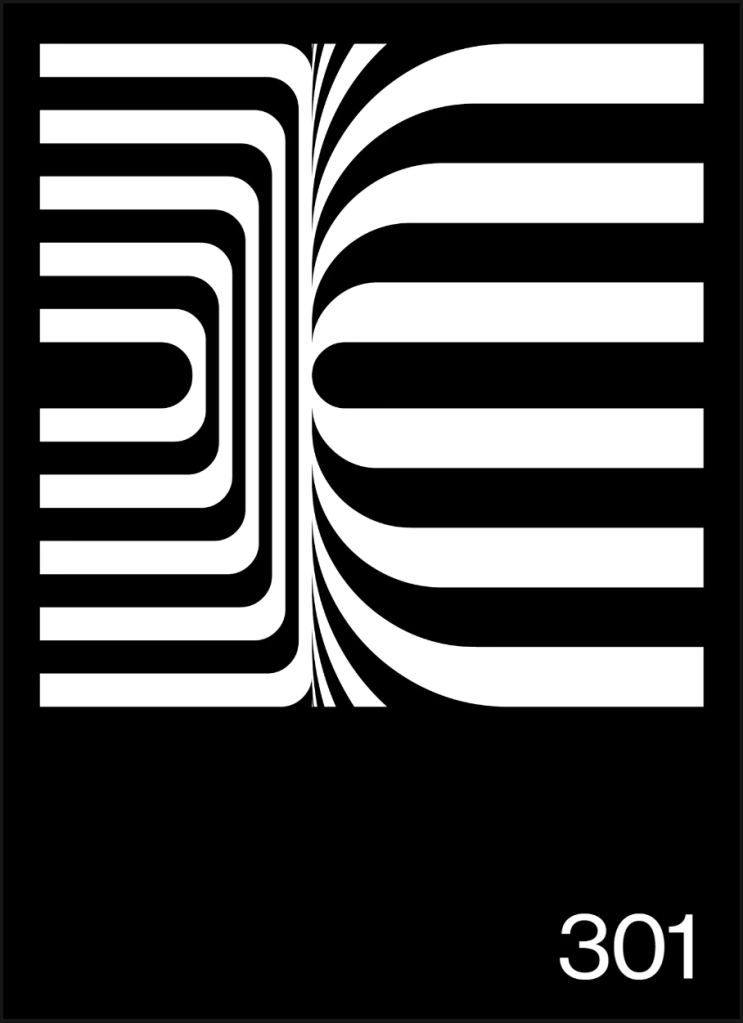
If you do nothing else from this Drop, please hit the book’s website. It’s super fun!
We learn the alphabet so young that the shapes eventually become invisible. We stop seeing letters as drawings and start seeing them as meaning, which, I mean…“fair”…as that’s the whole point, but it also closes a door. Nigel Cottier’s Alphabetical Playground literally kicks that door back open. The 698-page book treats letterforms as raw material for graphic experimentation, stripping away semantic function to reveal what’s left: pattern, texture, movement, and shape. Cottier, who joined Pentagram as a design director in December 2025, has been collecting these ideas since childhood, doodling letters on square grids in the backs of notebooks. He calls it his “magic folder of ideas saved for another day.”
Every chapter takes a design premise and pushes it until something breaks or something new emerges. The “Shifting Pattern” section generates letterforms through disruption and fragmentation, splitting and mirroring core structures until you have to work backward to figure out what letter you’re looking at. The “Recontextualised” section pulls from Arabic, Armenian, Burmese, Hebrew, Tamil, and a dozen other writing systems, reappropriating glyphs to examine how cultural context reshapes meaning. He uses the NATO phonetic alphabet in captions so you can puzzle out the more abstract pages. The whole thing is printed in black and white on matte paper, which forces the reader to focus on form rather than getting distracted by color.
There’s a line in the introduction that’s worth a mention: “a code within a code, a game within a game, a system within a system.” That succincly encodes the heart of what Cottier is trying to communicate. Letters are already an encoding of spoken language, but he’s showing us how much more can be embedded in that encoding. The book connects to asemic writing in concept, but where asemic work tends toward freeform calligraphy, Cottier built everything methodically in Glyphs, the same software used for commercial typefaces (and that we’ve mentioned quite a bit now in these Tuesday Drops). It’s a form of systematic creativity, where the plan becomes the constraint which fosters expression.
He’s hinted that his next book might add one color plus black, but I think there’s something right about starting here, with just the bare frame to build the conversation upon.
FIN
Remember, you can follow and interact with the full text of The Daily Drop’s free posts on:
- Mastodon via
@dailydrop.hrbrmstr.dev@dailydrop.hrbrmstr.dev - Bluesky via
<https://bsky.app/profile/dailydrop.hrbrmstr.dev.web.brid.gy>
☮️
 hrbrmstr's Daily Drop
Leave a comment